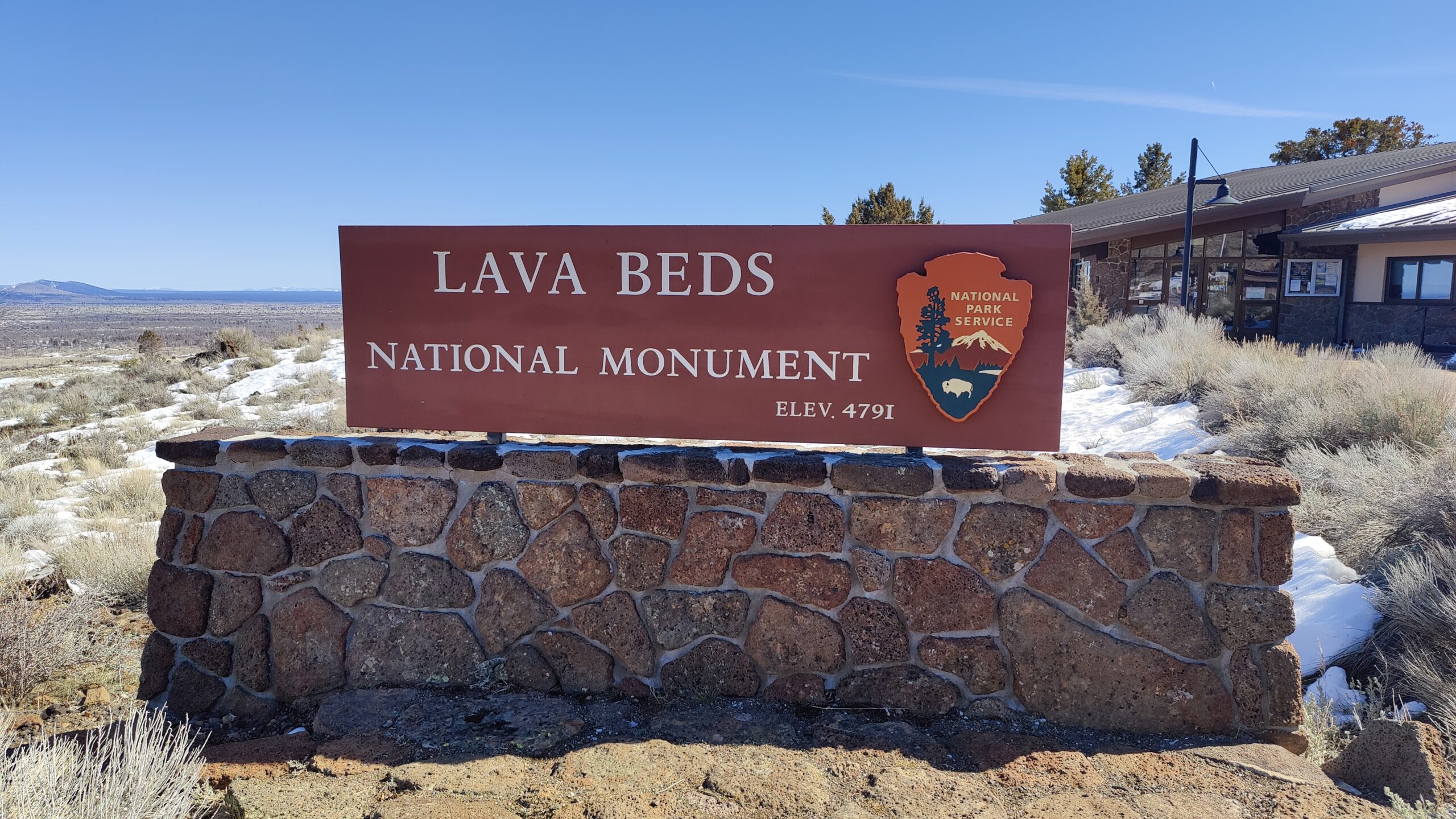
Why Lava Beds
Lava Beds National Monument sits on the northern flank of the Medicine Lake Volcano, a massive shield volcano in northeastern California. The monument protects over 700 lava tube caves, high desert plains, and the historic sites of the Modoc War. This is one of the few places where you can walk through a lava tube, explore Native American rock art, and stand on the edge of a volcanic crater in the same day.
The Medicine Lake Volcano is different from the stratovolcanoes of the Cascade Range. It’s a shield volcano — broad, low, and built by countless lava flows rather than explosive eruptions. The result is a landscape of lava tubes, cinder cones, and obsidian flows that rewards exploration.
The caves
Most visitors come for the caves. The monument has over 700 lava tubes, ranging from short crawlways to Cathedral Cave, which runs nearly 7,000 feet. Some caves require helmets and lights; others you can walk through with a phone flashlight. All of them are cool year-round — literally, about 55°F even in summer.
Valentine Cave
Valentine Cave is the most accessible lava tube in the monument. A paved path leads to the entrance, and the first 200 feet are smooth, flat, and easy to walk. Most visitors stop here, but the cave continues for another 1,600 feet of rough, rocky terrain. Bring a headlamp and sturdy boots.
Skull Cave
Skull Cave is named for the bones found in its ice floor — bighorn sheep and bears that fell through a hole in the ceiling thousands of years ago. The cave is wide, tall, and has a permanent ice floor even in summer. It’s a short walk from the parking area and requires no special equipment.
Cathedral Cave
Cathedral Cave is the longest lava tube in California open to the public. It’s nearly 7,000 feet of tight squeezes, rockfalls, and the occasional 12-foot ceiling. You need a permit, a helmet, and serious lights. This is not a beginner cave.
Above ground
The surface of Lava Beds is as interesting as what’s underneath. The monument sits at 4,000–5,700 feet elevation, high desert with sagebrush, junipers, and the occasional ponderosa pine. Wildlife includes mule deer, pronghorn, coyotes, and over 240 species of birds.
Schonchin Butte
Schonchin Butte is a 0.7-mile climb to a fire lookout with 360° views of the Medicine Lake Volcano, the Cascades, and the high desert. The trail is steep but short, and the view from the top is worth the effort.
Captain Jack’s Stronghold
Captain Jack’s Stronghold is the site of the Modoc War of 1872–1873, where a small group of Modoc defenders held off the U.S. Army for months in a natural fortress of lava tubes and trenches. The interpretive trail is a 1.5-mile loop through the stronghold.
Practical notes
- Best time to visit: Late spring through fall. Winter brings snow and many caves are closed.
- Cave permits: Free permits required for all caves except Mushpot, Skull, and Valentine. Available at the visitor center.
- Equipment: Headlamp (not a phone light), helmet (strongly recommended), sturdy boots, layers — caves are 55°F year-round.
- Gas: Fill up in Tulelake or Dorris. There’s no gas in the monument.
- Cell service: Minimal to none. Download offline maps.
What we skipped
We didn’t do the longer caves — Big Painted Cave, Gold Corridor, and the like. Those require permits, serious lights, and a comfort with tight spaces and rock scrambling. We also didn’t do the Tule Lake National Monument, which shares the visitor center and tells the story of the Japanese-American internment camp that was here during World War II. We’re saving both for a return trip.